Total Pageviews

Monday, September 22, 2014

Chicken Tortilla Soup


This is truly one of the easiest soups to throw together. As Autumn approaches, cooler temperatures bring opportunities to warm the kitchen, and comfort our appetites.

Easily altered, you don't have to stick to the exact recipe. In fact, this soup was the end result of picking five recipes from various cookbooks, then combining them, changing a few things, adding a few things and even eliminating certain ingredients that didn't make the cut.

Don't feel bad about changing the recipe. It is a great one to use when you're cleaning out the refrigerator and raiding the pantry. If you are lucky enough to have fresh Hatch green chilies, by all means, use fresh peppers.

If you would like to see a step-by-step tutorial with plenty of pictures, CLICK HERE

Prep the chicken:

3-4 boneless chicken breast halves or 2 cups of shredded rotisserie chicken
(Our local meat market always mentions the fact that a breast is technically two halves)

Olive oil (yes, you can substitute vegetable oil)
____________________________________________________________________

 In a small bowl, combine the following:

2 teaspoons of ground cumin
1 teaspoon of chili powder
1/2 to 1 teaspoon of salt (*) See note about sodium below
1/2 teaspoon of garlic powder
1/2 teaspoon of ground coriander
1/2 to 1 teaspoon freshly ground black pepper (I lay on the grinder with a heavy hand)

Remove all skin, bones and such from chicken breast, place breasts on a baking sheet. Sprinkle just a bit of the seasonings on both sides of the chicken, reserving the remaining spices. Bake at 350-375 degrees until chicken is completely cooked, or a meat thermometer reaches 180 degrees. Set aside to cool.

Optional cooking method for chicken: Cut raw chicken breast into small cubes, sprinkle with spice, and cook on a stove top with a bit of oil in the pot. When cooked, set chicken aside.
____________________________________________________________________

Vegetable prep work:

1 medium or large onion - diced
1 whole jalapeno pepper - remove stems and veins, dice. I leave in the seeds for the look. 
1/2 cup poblano pepper - diced (substitution: 1/2 cup green bell pepper)
1/2 cup red bell pepper - diced
3-4 cloves of garlic - finely minced
 ____________________________________________________________________

Canned goods:

10 oz. can of whole green chilies (do not drain)
10 oz. can of Original Rotel (do not drain)
11 oz. can of white corn (drained)
15 oz. can of black beans (drain and rinse)
28 oz. can of crushed tomatoes (do not drain - I used Hunt's brand)
32 oz. carton of chicken broth  (I used low sodium, see note below *)

____________________________________________________________________

* A note about sodium

My husband loves the salt shaker. No matter what I cook, his habit is to grab the shaker before even trying the food, but we've been working on this. I was very surprised that he not only tried the soup first, but then only added a little bit of salt. This is saying a lot, especially for someone with such tainted taste buds. We could all use a little less salt.

Though low-sodium chicken broth is used in this recipe, there is still plenty of sodium / salt in the soup. Consider lower sodium beans and perhaps even lower sodium tomatoes if you are watching your salt intake. If you just can't live without it, you can always salt your own bowl of soup instead of the entire pot.

____________________________________________________________________


Cooking over medium heat, in the bottom of a large soup pot or heavy Dutch oven, drizzle a bit of olive or vegetable oil. Add all of the prepped vegetables, sprinkle with the leftover seasonings from the chicken breast. When the smell of the spices fill the air, (only a moment or two) add all of the canned and cartoned goods. Stir and allow to cook while you shred the chicken.

Shredding the chicken:

By now, the chicken may be cool enough to handle. You may cut the chicken into cubes if you wish, or shred the chicken by using two forks, pulling at the breast to create shredded pieces. Once the chicken has been prepped, add it to the soup. Reduce the temperature and let the soup simmer for about 30 minutes.

Serve when hot, sprinkling any of the following tidbits on top for a beautiful presentation:

Fresh avocado
Grated cheese (Don't fret, I used mozzarella. Suggested cheese: sharp cheddar, pepper jack, Monterey)
Fresh diced onions
Crumbled tortilla chips or strips
Freshly ground black pepper

Bon appetit!


Friday, September 19, 2014

Beef and Peppers in an Edible Bird Nest

For a complete step-by-step tutorial with even more pictures, please visit my Beef and Peppers in an Edible Nest - An Instructable!

You won't have to climb trees for this dish, nor will you have to pay thousands of dollars as some people do, actually cooking with, and consuming the nest created by a young bird in the Southeastern Asian region. The bird is known as a Swift, or Swiftlet. The nest is known as Yanwo, constructed with the saliva from a Swiftlet. Yes, I'm serious. People eat bird nests. When the nest is dried, it is valued for culinary use, said to possess medicinal, as well as aphrodisiac qualities. The nest has a gelatinous texture when cooked, and it is often used for soups, very expensive soups.

But we'll skip the Swiftlet spit, and make our own edible nest using your choice of white potatoes, sweet potatoes or even taro root, a bulbous root typically found in the produce section of an Asian supermarket. After frying the nest, it is filled with a delicious beef and pepper stir-fry. Come along, and I'll show you how!


Although a few kitchen gadgets are necessary, they are not overly unusual, and are often found in a local store.

SPIDER / STRAINER: - A small, rounded wire basket, typically attached to a bamboo handle, is known as a ‘spider’, or strainer. While you could easily improvise, a second spider is best for making the nest that will contain the beef and peppers. Look for the gadget under key words such as spider, strainer, Asian strainer and such. They are available in different sizes such as 6”, 8” and even larger, depending on what size nest you would like to make.

WOK: - A wok, or other frying pan which will enable heating of several inches of cooking oil. Be certain the pan is deep enough to cover the basket of the spider, but not so deep that the tool cannot be safely used at an angle.

CHEESE GRATER or MANDOLINE: – You will need something to shred or slice potatoes in a very thin strip. A mandoline (not to be confused with the musical instrument 'mandolin') will produce thicker strands of fries that will form a heartier basket, while a cheese grater with large holes will make a more delicate bedding for the beef and peppers. Please note! Using a potato or yam on a mandoline can be a bit dangerous, as the vegetables are very firm, requiring quite a push on the blade to cut properly. Use extreme caution, and always use the protective vegetable holder that should have been included with your mandoline.

DEEP FRY THERMOMETER: Oil temperature should be 325 degrees (for white potatoes) to 350 degrees (for sweet potatoes or Taro root), depending on which root used for the nest.

OTHER: Paper towels, sharp knife, measuring cups and spoons, fork, scissors, etc.

 Recipe courtesy of Sunset Magazine / Lane Publishing.

Note: some ingredients are called for more than once, and some are needed for a separate cooking sauce, shown below (*). Please review the entire recipe before beginning. Handy tip: This meal tastes even better the next day, a great make-ahead dish! Comes together easily when everything is measured ahead of time. A great excuse for those little tiny bowls.


Alterations – absolutely! Add mushrooms. Add onions! Bamboo shoots or water chestnuts!
__________________________________________________________________
Approximately ¾ lb. boneless lean beef such as Flank steak
1 Tablespoon dry sherry (I used Marsala. Who is going to know?)
1 Tablespoon soy sauce
1 Tablespoon water
2 teaspoon salt, divided – (If using full sodium soy sauce, considering omitting)
¼ teaspoon sugar
2 teaspoons of corn starch
Salad oil / cooking oil / vegetable oil
__________________________________________________________________
*Cooking sauce – Combine 1 Tbl. soy sauce, 1 Tbl. Corn starch, ½ cup chicken broth or water. Stir, set aside for later use, to be added to the beef mixture.
__________________________________________________________________
1 clove of garlic
½ teaspoon of minced ginger
2 green / bell peppers, cut into 1/4” wide strips (By all means, yes, you may use a different color bell pepper, though green is the best choice to pair with the beef, in my opinion.)
Suggested addition – one onion, sliced thinly
Suggested addition - a good dose of chili oil for more flavor
¼ teaspoon salt


Using a 1/2 pound piece of beef, slice the beef with the grain into 1 to 1 ½” strips, then cut the strips into 1/8” pieces. Refrigerate the meat while prepping the vegetables and sauces.

It is helpful to measure out all the little things such as the soy sauces, salt and such, all lined up on the kitchen counter top waiting their turn. When and if you eat at fast food restaurants, save the little plastic condiment cups for prep bowls.

Cut a green / bell pepper in half. Cut the top rounded portion off each pepper half. Remove seeds, pith and parts of the pepper that are not green. You may slice or dice the peppers, though strips make a beautiful statement in the completed dish.Peel a small piece of ginger, then dice into tiny pieces. If you are using an onion, cut it into thin slices.Peel and mince the garlic. Don't be afraid to throw in another clove.

In a bowl large enough to sufficiently hold the meat after it is cut, combine these ingredients:

1 Tablespoon dry sherry, 1 Tablespoon soy sauce, 1 Tablespoon water, ¼ teaspoon salt, ¼ teaspoon sugar, 2 teaspoons of corn starch. Stir well to mix the corn starch into the sauce. Add the sliced beef, stir to coat, then add 1 ½ teaspoons of oil. Cover, and allow to marinate for 15 minutes.

If you have not already created the *Cooking Sauce from step 2, do so now, and set aside.


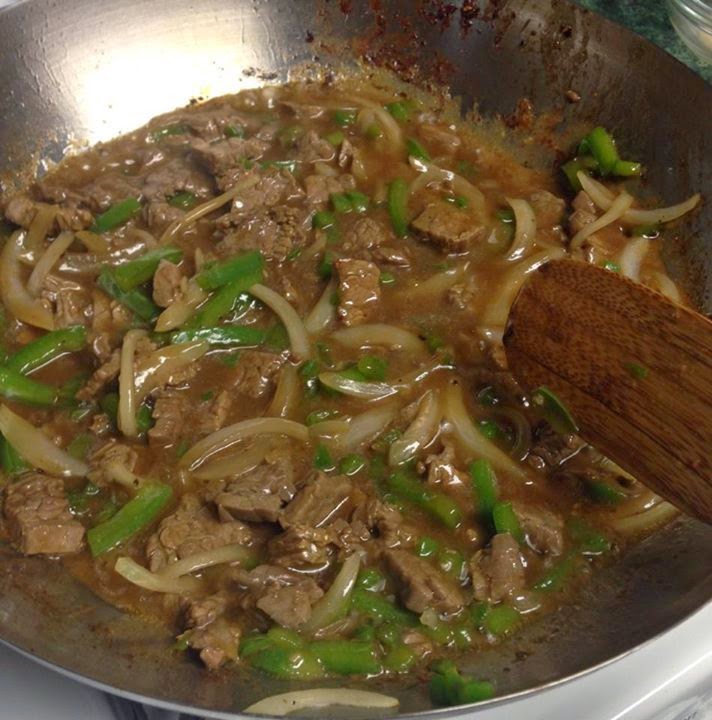
Heat a wok or other large pan over high heat. Add 2 Tablespoons of cooking oil. Once the oil is heated, add garlic and ginger, give it a swirl in the oil, then add the marinated beef. Stir fry for approximately 2 minutes, or until no longer pink on the outside. Remove from pan and set aside.

Add 1 Tablespoon of cooking oil to the wok. Add bell pepper, add onions if using, stir fry for just a few moments, then add 1 Tablespoon of water and ¼ teaspoon of salt. Stir, cover, and cook for 1 minute. Add meat back to the pan, then add the *Cooking Sauce. Stir until mixture thickens and is hot throughout.

Nests can be made ahead of time, though in my opinion, are best when prepared fresh the day of eating. Much of the prep can be done ahead of time, so if you are serving this meal to dinner guests, it won’t take long to make fresh nests. Beef mixture can be made a day ahead as well, which allows the flavors to come to life.

2 medium-sized potatoes (Russets are fine) or 2 sweet potatoes, or Taro root
Corn Starch
Frying oil

 On a casual weekend, this dish is very easy to prepare, but if you are planning a dinner party, or having this during a busy work week, consider prepping the vegetables ahead of time.

Simply peel, then shred or slice your choice of root vegetable, rinse well, and fill a glass jar with the shreds. Fill to the top with water and refrigerate until needed. The shreds must be drained and dried with a towel before frying, to avoid grease spatters when the oil and any residual water meet. 
Heat the frying oil to a temperature of 325 degrees if using white potatoes, or 350 if using Taro root or sweet potatoes. Use a deep fry thermometer to ensure the oil is at the proper temperature. Peel, then shred or slice the root of your choice into pieces. Rinse and drain well, dry the pieces on a very clean towel, paper towel, etc. Try to remove most of the water before proceeding.

If you are prepping ahead, you can fill a glass container with the pieces, add water, and refrigerate until ready to use, but be certain to drain and pat them dry before frying . Once the pieces have been dried off, sprinkle 1 Tablespoon of corn starch onto them, and mix well. You may add a little more corn starch if needed. This will be the ‘glue’ that binds the fibers of the nest together, so don’t leave it out, or you may end up with a pile of loose hash-brown-looking things.

If you have already begun heating the oil, check the temperature. If you are close to the required degree but not yet ready to cook, move the oil off the stove burner until you are a little closer to frying time. You do not want to experience a hot oil fire or suffer a burn. Be careful!

Lightly spread the ‘fibers’ into the spider / strainer, up the sides, filling the middle, lining the strainer. The nest does not need to be completely filled. Place the second spider on top of the nest, and press down to secure. The two spiders will be held together as the tools are immersed into the hot oil. Trim away any excess potato. Slowly immerse the nest into the oil, continuing to hold the tools together. Keep submerged for approximately 3-4 minutes, or until fried golden brown. If you practice, you can become quite adept at knowing just when to tug on the top spider to loosen it from the other without wrecking the nest.


When frying is complete, lift the spiders out of the oil, allowing excess oil to drain. Move to a paper towel. Use a fork to scrape any segments that may have locked the nest into the spiders. Usually, you can scrape the top spider, and it will release. Then flip the second spider over and scrape the backside of the tool. The nest should fall out. Salt the nest if desired. Drain well.


Place each cooked nest on a plate, and fill with beef and pepper mixture.

Best served when made fresh and hot. If your beef is a bit saucy, you might allow a bit of it to drain through a slotted spoon so as not to make the nests soggy too fast.

Once you make these, you'll be surprised at how easily they come together. The instructions are hopefully written in a clear manner so as not to intimidate anyone. This is easy, and fun, and especially so when your family doesn't know what is coming to the table! Something fun for dinner!


Use your imagination when making them. Here are just a few things you can add or subtract to the mixture:

Bean sprouts
Bamboo shoots
Onions
Mushrooms
Scallions
Water chestnuts
Peanuts
Oyster sauce
Chili oil
Chili peppers
Carrots
Celery slices
What will you add? Bon appetit!

Sunday, October 20, 2013

Dutch Babies and Poached Pears, oh my!


It isn't quite a souffle, not yet a popover, beyond a pancake
and still couldn't be called a quiche. Known as a 'Dutch Baby'
this is a wonderful treat made with but a few ingredients, easy
to whip up in no time, though if the batter is refrigerated
overnight, even better.

Served with poached pears, this was a hit with my husband,
parents, and even our dogs!

Though it does not rise as high as the eggy treats mentioned
previously, the inflation it does achieve is quickly deflated once it
is removed from the oven. A sprinkle of powdered sugar and
freshly poached pears, divine!


Recipe courtesy of my favorite Leite's Culinaria.
If you haven't experienced the joy of Leite's, I encourage you to visit.
Not only is the crew a wonderful group of people, their sense of humor are
fabulous, they give credit where credit is due and always provide the
source of their tested, tried and true recipes, unlike some who change
an ingredient or two and claim it as their own. I can't sing their
praises enough.

For the Dutch Baby Recipe, CLICK HERE

Tuesday, October 8, 2013

Chocolate Sour Cream Bundt Cake


Another recipe to keep, from none other than Leite's Culinaria

Chocolate Sour Cream Bundt Cake

Remember the glorious cake made with the recipe from the
side of a metal can of Hershey's cocoa way, way back when?
You thought that cake was the be-all, end-all of the
time, right? Well, hold on to your cookbooks, folks.
This one is going to knock your socks off.
Everything in moderation, right?

As I type this, I am licking the remaining crumbs from
my lips. I would probably lick my plate, too, if my husband
were not in the room.

Though we typically do not indulge in such decadent-looking
cakes, it was well worth the risk. My only regret is not paying heed to the numerous posts from others to heavily butter the pan. Looking like a guaranteed flunk in Home Economics class, I pieced it back together, the glorious glaze hiding the fact that I braved a new pan, knowing better all the while.

Instead of using plain water, I added half a cup of coffee, half a cup of water, and a teaspoon of Medaglia D'Oro instant espresso.

I did butter the pan, but not nearly enough, though this fact was dismissed quickly when I found myself eating the deep, dark, delicious Humpty Dumpty bits that stuck to the pan.

Once a slice was served, my culinary misdeed was forgiven and forgotten. I will definitely make this cake again. The moistness, the flavor. Hubby defined this as "The perfect, perfect chocolate cake." Oh, and before I forget, this cake should be refrigerated. I know what you're thinking, that your cake will get dry and hard. Ah, quite the contrary. It only seems to get better after a night in the 'fridge!

For the recipe, please visit Leite's Chocolate Sour Cream Bundt Cake

Grab a cup of coffee. You'll be there a while.

Sunday, October 6, 2013

And so begins the twined rag rug...


This afternoon, October 6, 2013, my husband completed
construction of a 27" x 36" red oak loom for me. The
loom will be used for twining a rag rug, which is a
very old, yet still very unique method of weaving
cloth into itself, forming a thick mat, or rug.

Years ago, I found myself enamored by rag rugs, yet
did not manage to get around to actually making one
until I happened upon an 'all you can stuff into a
bag for one price' sale at a local thrift store.
Making my way around the store, I found four pot
holders that were made using the reminiscent square
frame with pegs, reminding me of weaving rugs.


Although my loom of long ago was metal, and painted red, if I remember
correctly, today's looms are made of plastic. Because I had such fond
memories of making similar pads as a child, I bought the four pads during
the sale. Making my way around the store, a giant double-rack display
of T-shirts caught my eye. All the shirts I could fit into a bag? Potholders?
Looms? It was time to make a rug!

For fun, I bought a children's weaving loom / pot holder making kit at a local box
store, made a pot holder and giggled. After the pad was finished, the wheels began to
turn. When I arrived home with my bounty of T-shirts, I quickly pulled out all of my
rag rug books collected over the years, surfed the internet for days, and daydreamed
of rugs.

And then I found it.

Nancy Vandenberg's blog - Wyoming Breezes.
Nancy is an amazing woman with a warm heart and enough talent to shame you under the table
for trying. She is quite a twiner, and in fact, has the most amazing black-and-white photo
of her own mother twining genuine rag rugs years ago. I fell in love with her site, and once
I found her instructions for making my own loom, there was no turning back. I began to stalk
her every wonderful blog post with admiration. With Nancy as my inspiration, here goes...

Stay tuned for updates and hopefully, completion.


Sunday, September 22, 2013

Fresh Autumn Apple Tart

As Autumn approaches, leaves begin to change colors, cooler weather is on the way, and apple harvesting season arrives!

In the spirit of the season, it is time for an apple tart! This is such an easy tart, without a great deal of hassle, yet one that will yield delicious results, not to mention a beautiful appearance.

When an apple variety by the name of Jazz arrived in our local grocery store, I knew what we would be having with our morning coffee - and soon! A Jazz is a cross between a Royal Gala and a Braeburn apple. The result is a sweet and crispy apple that holds shape very well, whether eaten fresh or even baked.

Recipe courtesy of Enza of New Zealand.

CLICK HERE FOR THE RECIPE

Monday, September 2, 2013

Roasted Garlic and OIive Pasta Sauce

A simple sauce with a lot of flavor, this recipe will create six pint jars of tangy sauce that can be used in so many ways. A great pot of sauce to make when you might have extra company coming for dinner.

This recipe was found in a little cook booklet put out by a company named Market Day. I just happened to stop at a second hand store one day, and found they were having an 'all the books you can fit into a bag' sale. Two bucks, and I walked away with a great wealth of recipes to try!

Though our garden is just about spent for the year, and fresh tomatoes would have been best, canned tomatoes work just fine for this recipe.

Just a few other ingredients, and two heads of garlic, and you're good to go! Come along, let's make the sauce!


Recipe from a little cook booklet by Market Day - with amended options for the roasting schedule.
Shown with added mushrooms and freshly ground black pepper.


2 heads of garlic (full heads, not single cloves)
1 teaspoon of extra virgin olive oil
3  28-ounce cans of peeled, whole tomatoes
1  6-ounce can of pitted ripe black olives, drained, diced
1  6-ounce can of tomato paste
1 tablespoon of dried basil leaves
1 teaspoon of red pepper flakes

After removing most of the paper husk, keeping the cloves intact, cut the tops from two heads of garlic to expose the cloves. Don't fret if your garlic has tiny green sprouts (known as 'germs') as they can be easily removed after roasting.

Place each garlic head on a square of aluminum foil, drizzle with olive oil, and wrap foil around the garlic.You may roast the heads at 350 degrees for about an hour, or 450 for about half an hour. After roasting, remove from oven, open foil packets and allow heads to cool. Squeeze heads to force cloves from the husk. Mash cloves with a fork.


Drain canned tomato juice into a large pot. (This is an opportunity to use your Dutch oven.) :-) Dice remaining tomatoes, removing any skin or blossom ends, add diced tomatoes to the pot. Add the mashed garlic, olives, tomato paste, basil and red pepper flakes. Bring to a low boil, reduce heat and simmer 5 minutes.

Sauce can be stored in a container with a tight-fitting lid for one week, or frozen for one month. May also be canned, recipe provides for slightly more than six pint jars of sauce.